Vishakha Agrawal
Last month, at lunch, my boss happened to mention something I hadn’t heard before: “Maple washing.”
I blinked. “What?”
She said, “You know Green Washing?” I nodded. She said, “It’s similar.”
According to The Globe and Mail, maple washing refers to businesses misleadingly portraying their products as Canadian-made or sourced—often to capitalise on the “Buy Canadian” sentiment.
So, Why Did This Even Start?
It all began when US President Donald Trump imposed tariffs on Canadian products.
In response, Canada retaliated by increasing tariffs on U.S. goods.[1]
This sparked a wave of consumer patriotism. People in Canada started switching to local brands and the Canadian government began actively promoting Canadian-made products.
While trade wars are never ideal—because every country is economically interdependent—this one triggered a major shift in how people shopped.
So, What Does This All Mean?
I decided to dive deeper. Make this relevant for marketing for a blog. But it’s been a few weeks, and I’m still stuck. How do I even begin? Well, I guess I will figure it out
My First Step: A Grocery Store Aisle
I went to Loblaws—not to shop—but to read product labels like a total nerd.
I saw labels like:
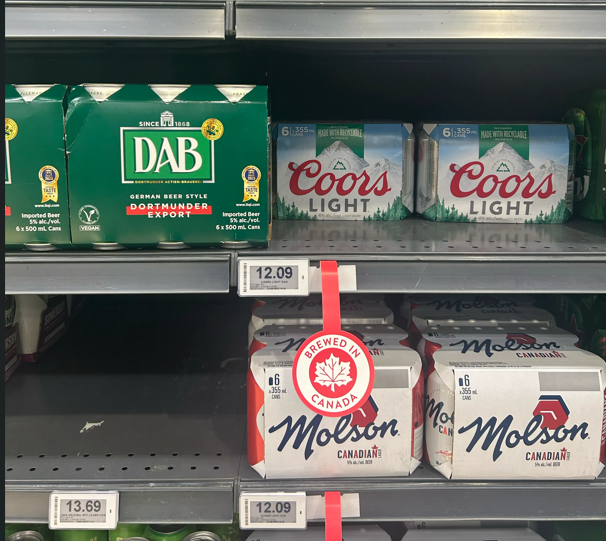

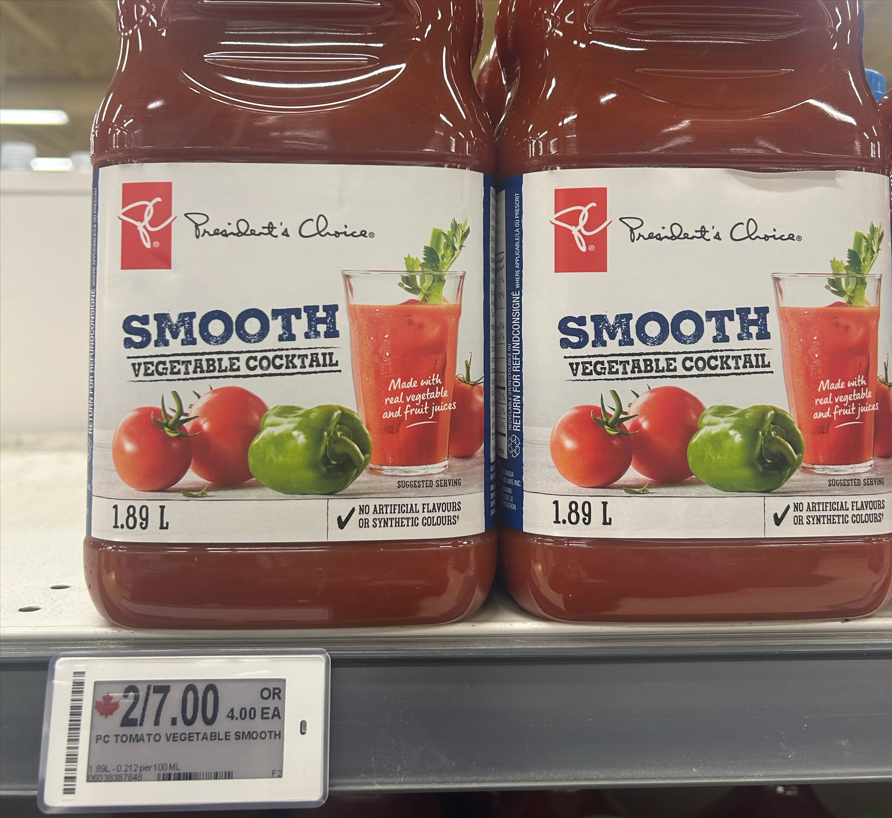
These weren’t on the packaging itself. They were on the price tag—right next to the pricing stickers. But here’s the point: Each label told a different story, but they all tried to say the same thing: “Hey, this product is Canadian.” But… is it?
What Does “Made in Canada” Really Mean?
Let’s break it down. You’ll often see phrases like:
- “Brewed in Canada” – Maybe the drink was made here, but were the ingredients imported? Where did the bottle come from? Who made the bottle cap?
- “Canadian owned and operated” – The company might be based in Canada, but where are the products manufactured?
Each phrase tells a slightly different story. Some focus on location. Others focus on ownership.
So, what are we actually buying? A product? Or just the vibe of being Canadian?
Let’s Talk Tim Hortons
Most people think Tim Hortons is as Canadian as it gets—hockey, Timbits, double-doubles, eh?
But here’s the deal:
- Tim Hortons is owned by Restaurant Brands International (RBI).
- RBI also owns Burger King.
- It was formed in 2014 through a merger.
- RBI is headquartered in Toronto, yes.
- But its primary investor is 3G Capital, a Brazilian-American investment firm.
So now, here’s the real question: Is Tim Hortons really Canadian? Or are we just emotionally attached?
What About Other Products?
Is it just groceries we should care about? What about electronics or clothing? Sure, a brand might be Canadian, but where does the fabric come from? Canada is definitely not growing cotton… unless something’s changed when I was working on this blog that I missed.
So, if I buy something from a Canadian retail store, am I buying Canadian? Or… am I?
Under the Consumer Packaging and Labelling Act, a “Product of Canada” label means at least 98% of the direct costs of production happened in Canada. It’s made in Canada by Canadians—with minimal imports.
But then there’s confusion. Some products are labelled “Made in Canada”, others “Product of Canada”, or something else entirely.
So, Where Do We Draw the Line?
Are we boycotting U.S.owned brands now? What about Brazilian, Chinese, Japanese, Indian, investments? How far do we want to go?
Because today’s brand might have a flag on the package (Which is part of branding)—but be owned by a global corporation with no real ties to Canada.
A logo can include:
- National symbols (like the Canadian flag or a maple leaf)
- Colours (red and white to trigger Canadian pride)
- Taglines like “Proudly Canadian”
- Icons like mountains, hockey sticks, or beavers
All of it is designed to make you feel a certain way. But branding isn’t ownership. It’s just storytelling. So the question remains: Are you buying into the product? Or into the story wrapped around it?
Let’s go back to Tim Hortons as an example. To the average consumer—Tim Hortons is Canadian. They might even defend the company’s origin if challenged. But are consumers actually aware? Do they understand branding vs. ownership? For the sake of this article—let’s say no. Because even I thought Tim Hortons was a fully Canadian brand with global presence—until I read about it.
Why This Matters to Marketing
Saying “Made in Canada” drives sales.
It builds trust.
It sparks pride.
But when it’s not true? It breaks that trust.
This Brings Me to Ethical Marketing
Is ethical marketing about technical accuracy? Or does it demand true honesty?
Is it only relevant now—because Canada and the U.S. are in a trade war? Because tariffs are making headlines? Because “local” is trending?
Or should ethics in marketing be a constant—even when no one’s watching?
So, dear readers, are you buying Canadian? Or are you just maple-washed?
It’s more than just buying a product;it’s about how it’s sold to you.
Marketing and advertising play a huge role in shaping how brands and services present themselves. And that’s what you want to watch out for.
So, let me ask you readers…
Is JBC a Canadian company?
Let’s break it down:
- Jennifer is Canadian.
- The team includes people from Canada, India and Pakistan.
- The services we offer are American (Social media platforms Meta and Google ads).
- Our office furniture comes from the Netherlands (IKEA).
- The phones we use—founded in the U.S., made in China.
So… does that make JBC Canadian? What are the real parameters to judge that?
Is it about: The founder? The team? The clients? The tools? The location?
Or is it about the values we bring, the way we operate, and the community we serve?
Where do you draw the line?
You decide.
[1] Last update on tariffs: https://www.thetimes.com/us/american-politics/article/tariffs-90-day-pause-trump-latest-news-k30s3gqxh?utm_source=chatgpt.com®ion=global